
Skyr, natural 0% fat
Danone · most supermarkets
9 gprotein
51kcal
Per 100 g serving
17.6 g protein per 100 kcal

Not a taster. Not a lead magnet with the good bit behind an email form. This is the whole plan, the same five things I start every client on, written out in full.
Do them for the next four to six weeks and the first stone goes. Then, if you want a hand with the next one, you'll know exactly what you're buying.
Follow all five steps for four to six weeks and you'll lose your first stone.
Honest caveat, because I'd rather you trusted the rest of the page: the more you have to lose, the faster the first stone comes off. Someone starting at 22 stone will do it in four weeks. Someone at 12 stone might take eight. Some of week one is water, which is why the scale flatters you early and then appears to stall. It hasn't.
The steps are in this order for a reason. Each one makes the next one easier, and step one makes all four of the others possible. Do not skip to step two.
Everyone starts with the diet. It's why everyone stops with the diet.
Here's what actually happens. You decide Monday is the day. Monday is fine, Tuesday is fine, Wednesday you're in a meeting until seven and there's nothing in the house, so you order something. Now you've "ruined it", so Thursday is a write-off too, and by Sunday you're planning next Monday.
That was never a willpower problem. It was a logistics problem. The food was fine. The week wasn't built to hold it.
So before you count a single calorie, answer four questions on paper. Not in your head, on paper, because the ones you keep in your head are the ones that move.
That last one is the whole thing. Most people set one target, miss it once, and write off the week. Set a floor and a ceiling instead and a bad Wednesday costs you a Wednesday, not a month. You can build yours here in about a minute, and I'd do it before you read on.
Nothing in steps two to five works without this. It isn't the exciting step. It's the one that decides whether you're still doing this in March.
Fat loss needs one thing: eating less energy than you use, for long enough to matter. Everything else on this page exists to make that survivable.
Your body isn't a calculator, and the "out" side isn't fixed. Eat far too little for long enough and it turns the dial down. You fidget less, you move less, you feel colder and flatter and you burn less doing the same day. That's not you failing, that's biology doing its job. Which is why the target was never the smallest number you can survive. It's the biggest one that still moves the needle.
Work out your number now: use the calorie calculator. It'll give you maintenance and a fat loss target from your height, weight, age and activity. Takes thirty seconds and it's free.
Then three rules.
Once you've got your number, leave it alone for a fortnight. The urge to adjust it on day three is the same urge that's ended every previous attempt.
Two people eat the same calories. One loses fat and keeps their shape. The other loses weight and ends up smaller, softer and hungrier. The difference is almost always these two.
Protein is what tells your body to spend fat rather than muscle while you're in a deficit. Lose muscle and your metabolism sags, which is the mechanism behind losing the same stone three times. It's also the most filling thing on your plate by a distance.
Fibre is the one nobody talks about. It slows digestion, blunts the blood sugar swing that has you rummaging in the cupboard at four o'clock, and feeds the bacteria doing a surprising amount of work down there. Most adults in the UK get about 60% of what they need.
You don't need to hit both perfectly. You need a floor at each meal, and the floor is this: a palm of protein and a fist of plants, three times a day. Do that and the maths mostly takes care of itself.
Here's what that looks like on an actual Tuesday.
35–45 gPROTEIN · THE MEAL MOST PEOPLE WASTE
35–45 gPROTEIN · THE ONE THAT USUALLY GETS BOUGHT
40–50 gPROTEIN · THE EASIEST ONE TO GET RIGHT
Five ways to add protein without cooking anything different: swap normal yoghurt for Greek, add a tin of beans or lentils to anything with sauce, keep pre-cooked chicken in the fridge, put a scoop of whey in your porridge, and buy the higher-protein version of bread, pasta and wraps, which most supermarkets now do.
Five ways to add fibre in the same breath: leave the skins on potatoes, swap white for wholemeal in the three things you eat most, add a tin of pulses to any stew or curry, keep frozen veg in and throw a handful into everything, and eat the fruit rather than drinking it.
Not sure what your number is? The protein calculator works it out, and the cheat sheet underneath shows you what 30 g actually looks like on a plate.
Meals are the straightforward bit. What actually breaks a week is four o’clock at your desk, or nine at night on the sofa, when you’re not really hungry but you want something. Willpower is a terrible plan for that moment. Having the right thing already in the fridge is a very good one.
These are the ones I put in front of clients. Nobody pays me to list any of them, and almost all of them are in Tesco, Sainsbury’s or Lidl this week. Filter by whatever you’re short of.
Danone · most supermarkets
Per 100 g serving
17.6 g protein per 100 kcal
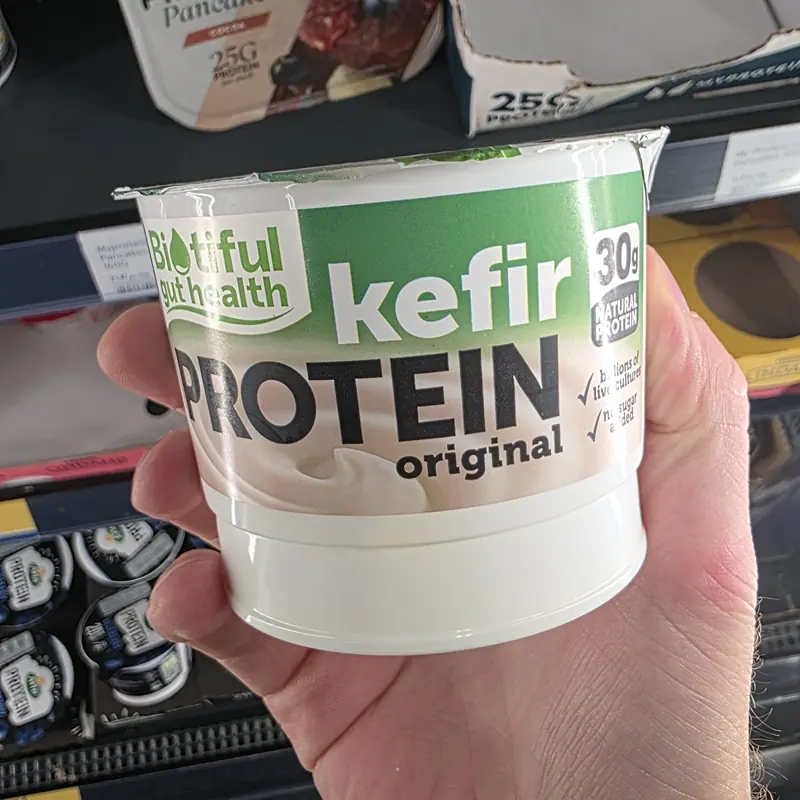
Biotiful · Tesco, Sainsbury’s
Per pot
16.7 g protein per 100 kcal
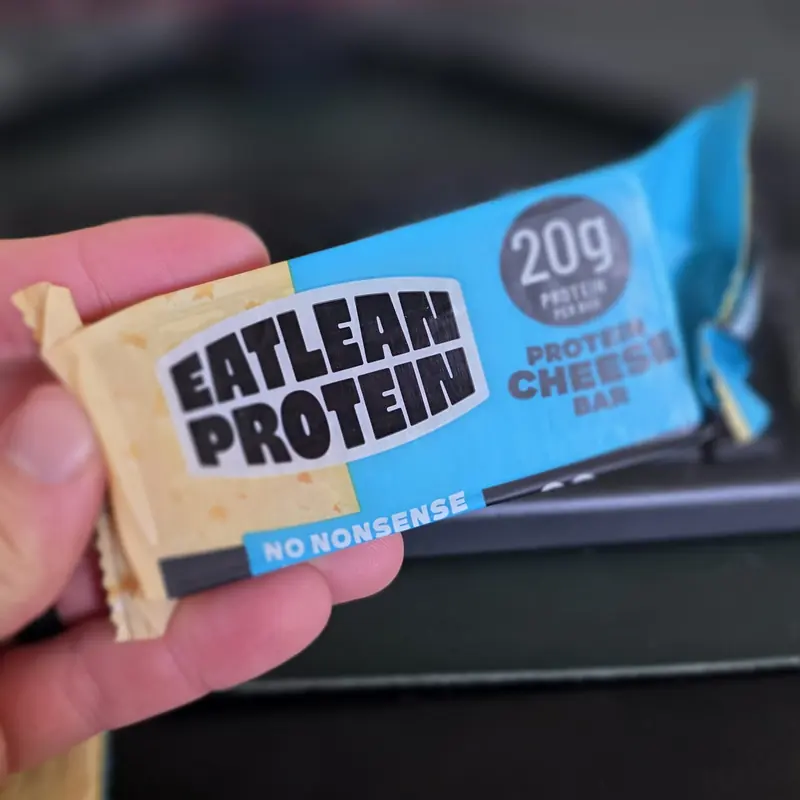
Eat Lean · eatlean.com
Per bar
14.1 g protein per 100 kcal
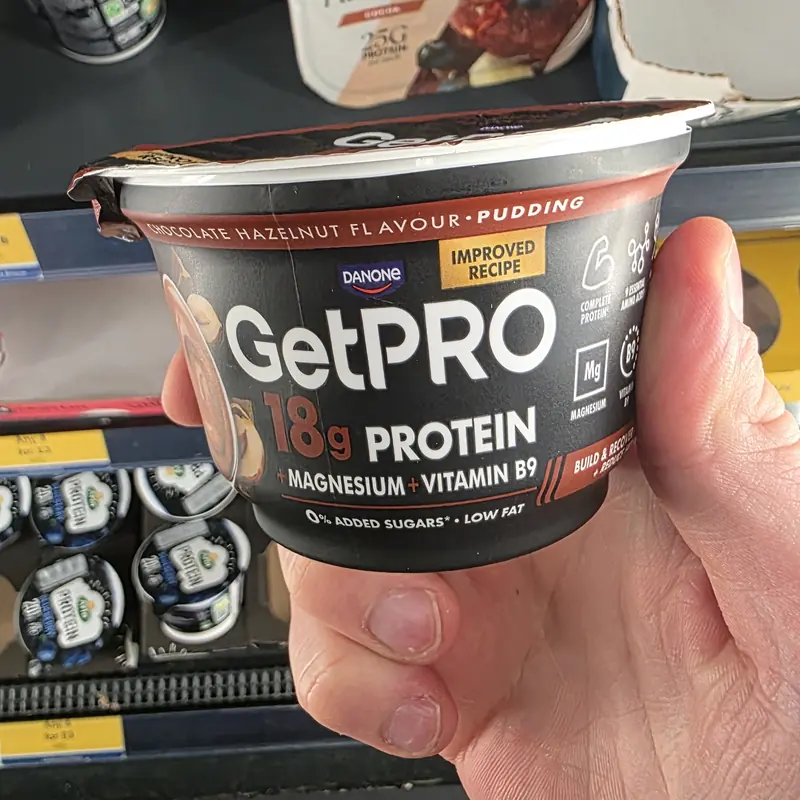
Danone · most supermarkets
Per pot
13.1 g protein per 100 kcal

Tesco, Sainsbury’s
Per Babybel
12.5 g protein per 100 kcal
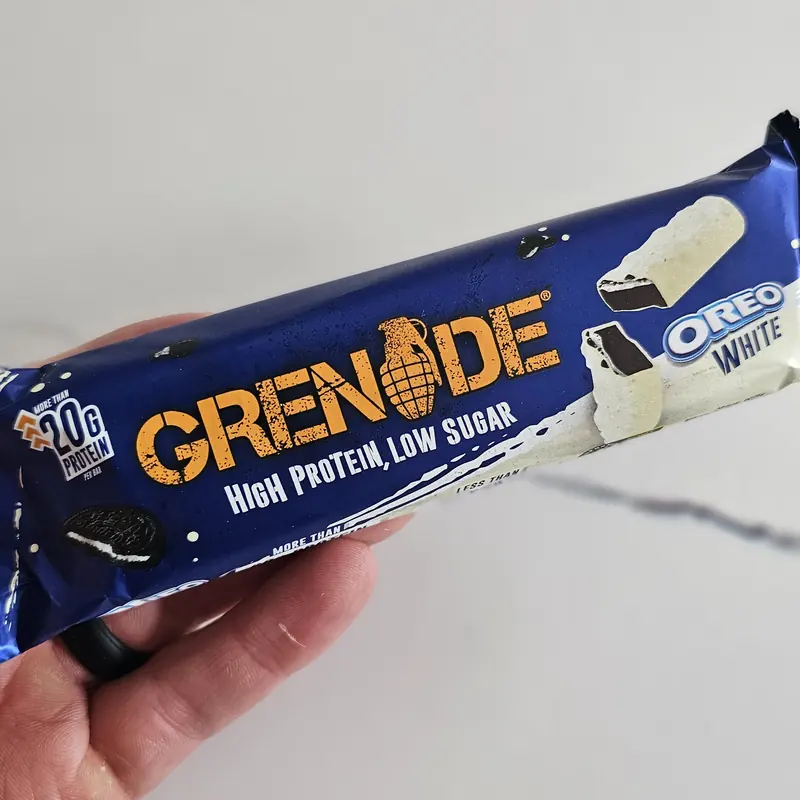
Grenade · most retailers
Per bar · fibre varies by flavour
9.1 g protein per 100 kcal

Gelatelli · Lidl
Per 500 ml cup, the whole thing
8.6 g protein per 100 kcal
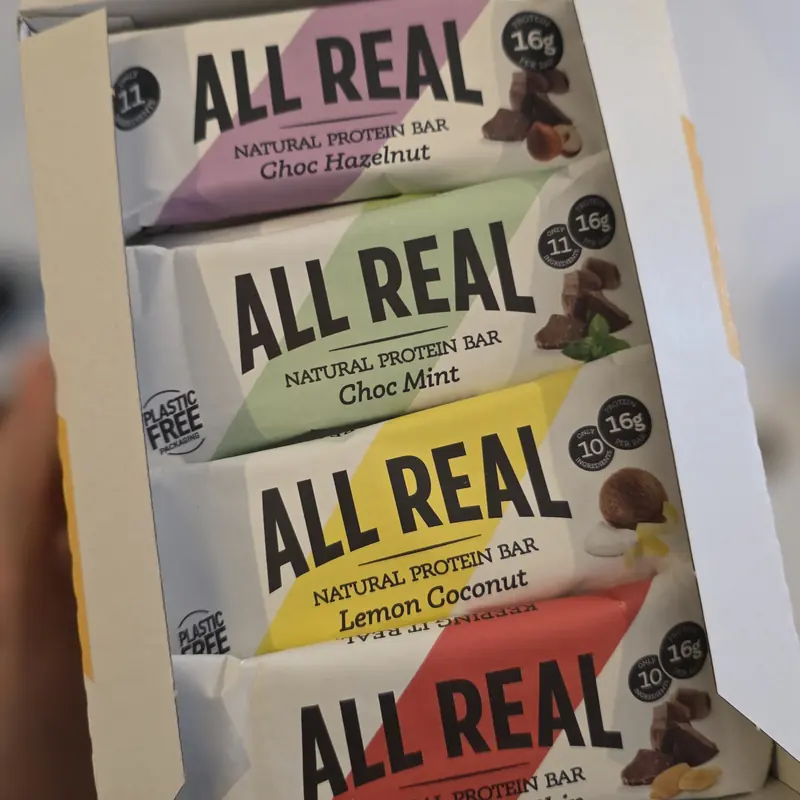
All Real · Amazon, allrealnutrition.com
Per bar
8.6 g protein per 100 kcal
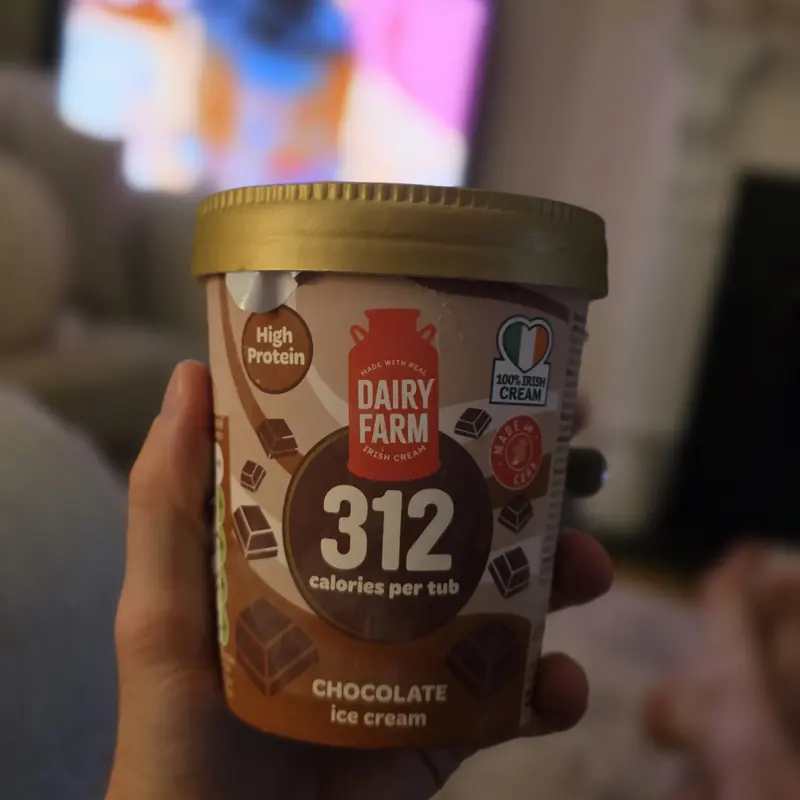
Dairy Farm · Lidl
Per tub, the whole thing
8.0 g protein per 100 kcal
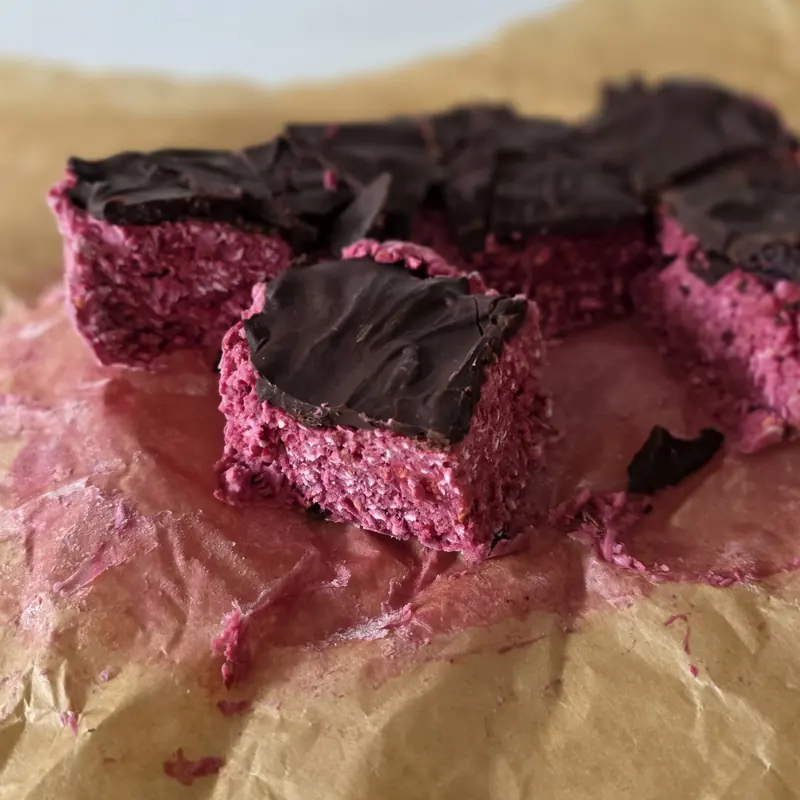
Homemade · recipe below
Per bar, makes eight
3.1 g protein per 100 kcal
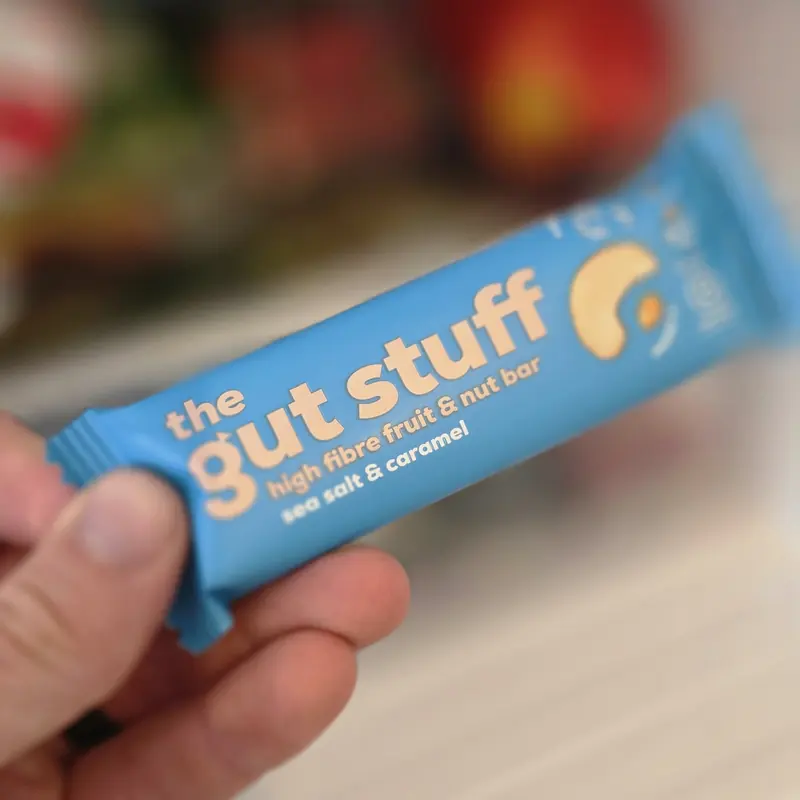
The Gut Stuff · Tesco
Per bar
Nearly half a day’s fibre in one bar
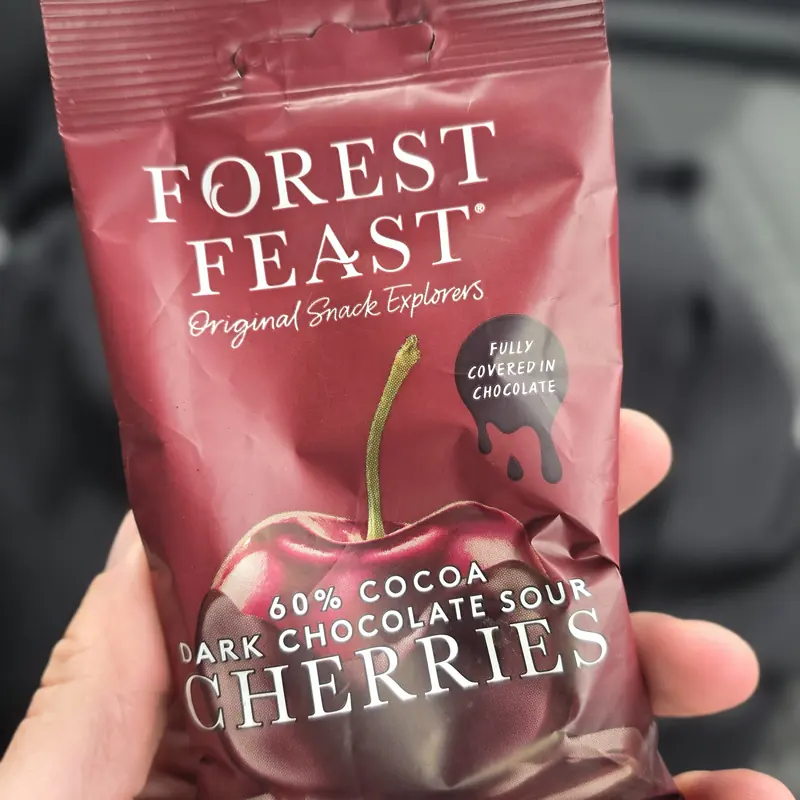
Forest Feast · Tesco, Sainsbury’s
Per 40 g pack
Made in Craigavon, and the pack is the portion
The line at the bottom of each card is the one worth reading. Protein per 100 calories tells you what you’re actually buying. A protein bar at 220 calories for 20 g is perfectly fine. A pot of skyr at 51 calories for 9 g is doing much the same job for a quarter of the budget, and you could have two of them.
Three rules for using this list. Buy the portion, not the multipack, because a 40 g pack is a decision you make once in Tesco rather than eleven times on the sofa. Pick two, not twelve, so the fridge always has the same two things in it and there’s nothing to decide at four o’clock. And these are still calories: they sit inside the deficit from step two, they don’t sit on top of it.
Figures are as printed on the pack when this was written. Manufacturers reformulate, so glance at yours.
The only thing on that list that doesn’t come out of a packet, and the one clients ask for most. About ten minutes of actual work and the freezer does the rest. Makes eight.
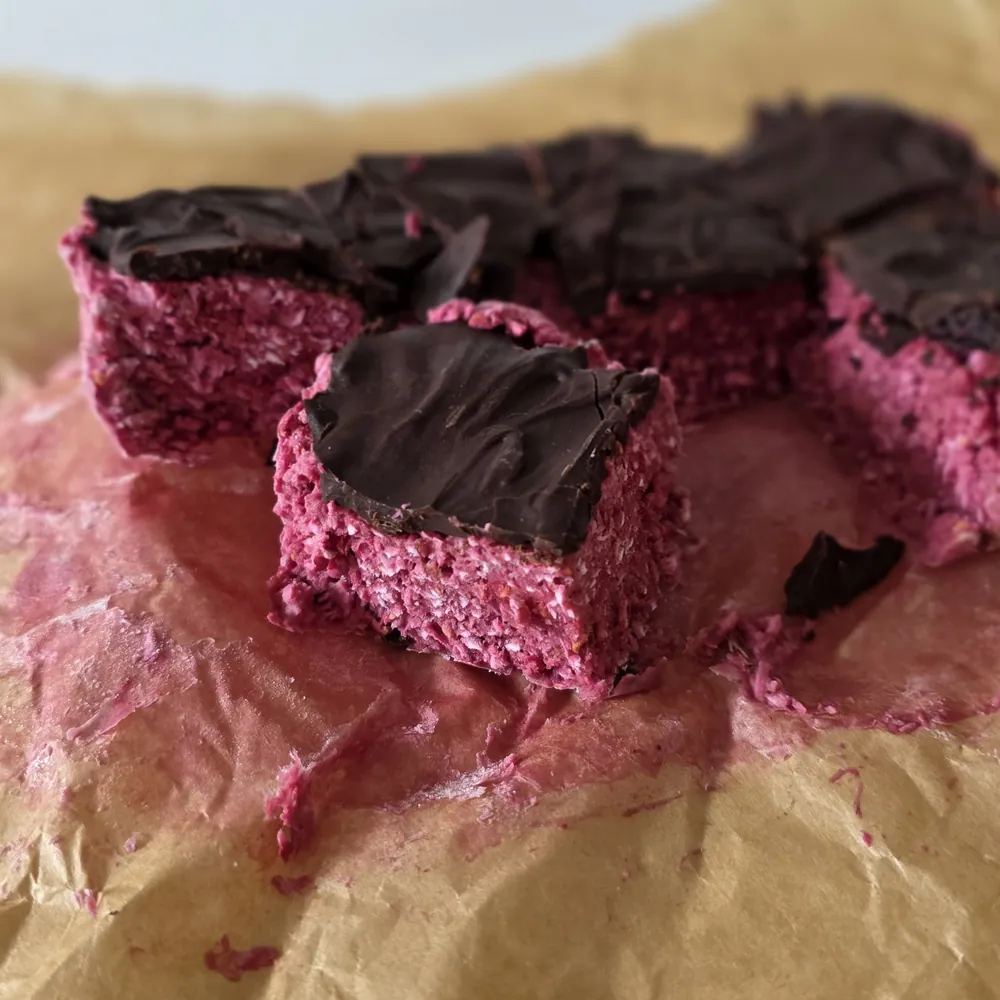
Per bar, at eight bars from the tin. Contains dairy.
The point of lifting during fat loss isn't the calories it burns, which is less than you think. It's that it gives your body a reason to keep the muscle rather than spend it.
Diet alone and a meaningful share of what you lose is muscle. Diet plus resistance training and you keep almost all of it, so you finish smaller and the same strength, with a metabolism that hasn't sagged. That is the entire difference between losing a stone and losing a stone that stays lost.
Three sessions a week, thirty to forty-five minutes each. These are the actual sessions I give clients, lifted straight out of the app rather than written for a website.
The two plans are shaped differently on purpose. In a gym you get lower, pull and push, because the machines let you work things separately. At home it is two lower body days and one upper, which surprises people until you think about it: the lower body holds most of your muscle, so it is where the most is at stake while you are losing weight, and it is the half that bands can genuinely load.
Two rules that matter more than the exercise list. Leave one or two reps in reserve on every set, meaning you stop when you could have done two more, not when you fail. And add something every week: a rep, a kilo, a better range of motion. That's progressive overload, and it's the only reason any of this works.
These are the real sessions, lifted out of the app. They lean on machines deliberately: nobody is standing next to you correcting your form here, and a machine holds you in a safe path while you learn the movement. Free weights come later, once the pattern is there. Every session starts with five minutes on the bike and a short mobility circuit, then the work.
Rest 60 seconds, then go again.
Rest 60 seconds, then go again.
These are the real sessions I give clients, lifted straight out of the app. Bands with handles, a mini band or loop band, and a mat covers all of it. Every session opens with the same mobility circuit, then the work is done as supersets: two exercises back to back, then the rest. That grouping is the programme, so don't split them up.
Rest 60 seconds, then go again.
Rest 60 seconds, then go again.
Rest 60 seconds, then go again.
Rest 60 seconds, then go again.
Rest 60 seconds, then go again.
Rest 60 seconds between sets.
Rest 60 seconds, then go again.
Rest 60 seconds between sets.
Rest 60 seconds, then go again.
Rest 60 seconds, then go again.
Rest 60 seconds, then go again.
Rest 60 seconds, then go again.
New to lifting, or coming back after a long time out? Start at the bottom of every rep range and add from there. If something hurts in a way that isn't muscular, stop doing it and ask someone who can watch you do it.
Everyone asks me what cardio they should do. Almost nobody asks about their steps. That's backwards.
You don't want to spend your life catching up on inactivity with cardio you resent. The movement that matters is spread across the day, and steps are the simplest measure of whether you're getting it.
The target isn't 10,000. It's more than you're getting now. Find your actual average from your phone, which will be lower than you'd guess, and add two thousand. Then add two thousand again a fortnight later. 6,000 a day is base camp, and 8,000 to 12,000 is where you want to end up. Past 15,000 you're into diminishing returns and burning yourself out.
If your day makes that sound impossible, it's because you're picturing a walk. It isn't a walk, it's fifteen small decisions:
Then sleep, which is the one that quietly decides the rest. When a client's stuck, the first thing I ask about isn't their food.
Cut sleep to around five hours and people eat 400 to 560 extra calories the next day, reaching for the quick sweet stuff and never feeling any fuller for it. At 5.5 hours instead of 8.5, on the same diet, 55% less of what you lose comes from fat. This was never about willpower. A tired brain wants fast energy.
Four rules tonight, and they're the ones that do most of the work:
There are three more, and a bedtime planner that saves your times. The full sleep protocol is here, and it's free like the rest of it.
Do those five things for four to six weeks and the first stone goes. You don't need me for that, and I'd rather you found that out for yourself than took my word for it.
Here's the part I'm honest about. The plan above is not the hard bit. Doing it in week five, when work is a mess and nobody is watching, is the hard bit. That's the whole reason coaching exists, and it's the only thing I'd charge you for.
So if the five steps have been useful, there are two ways forward and one of them is free.
£0
One thing a day for thirty days, straight to your inbox. It's the next layer down from this page: the detail, the awkward weeks, and what to do when the scale doesn't move.
Start the 30 daysNo card, and unsubscribe whenever you like.
£199/ month
Everything above, built around you rather than written for everyone: your numbers, your programme, weekly one to one check-ins and daily access for the questions that come up at 9pm on a Tuesday.
Get startedFollow the plan and your check-ins for 30 days. If you're not seeing progress, you get a full refund. No contracts, no minimum notice.
On Mounjaro or Wegovy, or thinking about it? There's a separate programme built around the medication. The five steps above still apply, they just get shaped differently.
If you've got a fair amount to lose, yes, and probably at the faster end. If you're already fairly lean it'll take longer, closer to eight weeks, and that's normal rather than a sign it isn't working. One to one and a half kilos a week is the honest early rate, and it slows the longer you go: past six weeks expect half a kilo to a kilo. Anyone promising more is either selling something or about to cost you a lot of muscle.
Because the diet is almost never what fails. The week fails, and the diet goes down with it. Nearly everyone I start with can tell me what they should be eating. What they can't tell me is when they're shopping, when they're cooking, and what happens on the Wednesday that goes wrong. Fix that and the food gets easy. Skip it and you'll be back here in March.
No, and not necessarily from day one. Tracking is a tool for learning what's actually in your food, and most people need it for a while and then don't. Some never track and do brilliantly because the structure does the work instead. Use whichever one you'll still be doing in six weeks.
Yes. The home plan in step four is the same structure with the same job, and a pair of adjustable dumbbells and a band covers all of it. What matters is that there's resistance work protecting your muscle while the weight comes off, not where it happens.
Nothing. That's what the floor in step one is for. One bad week costs you a week, and only becomes a month if you decide it has. Pick it back up at the step you dropped, not from the beginning.
Because it isn't secret, and pretending it is would be insulting. Every coach worth paying is working from roughly these five things. What you're paying for when you hire me isn't the information, it's someone reading your numbers every week and telling you the honest thing about them. If the free version works for you, genuinely, take it and go.
No. The coaching runs online and I work with people across Northern Ireland, the UK and Ireland. If you're near Ballymena and want some of it face to face, I take a small number of in-person clients at Peak Physique on the Pennybridge Industrial Estate. Most people never need it and the results are the same.
I'm a registered nutritionist (ANutr) with a Master's specialising in obesity and weight management, and a Bachelor's in Sports and Exercise Science. When you're coached, the plan is built from your intake, body composition, relevant blood markers and wearables rather than a template, and I work alongside medical professionals where it's appropriate.
Write your week down. It takes ten minutes and it's the step everything else stands on. Then come back and do step two.